
Insurance Insights
How Much Commercial Property Insurance Do Texas Real Estate Investors Need?
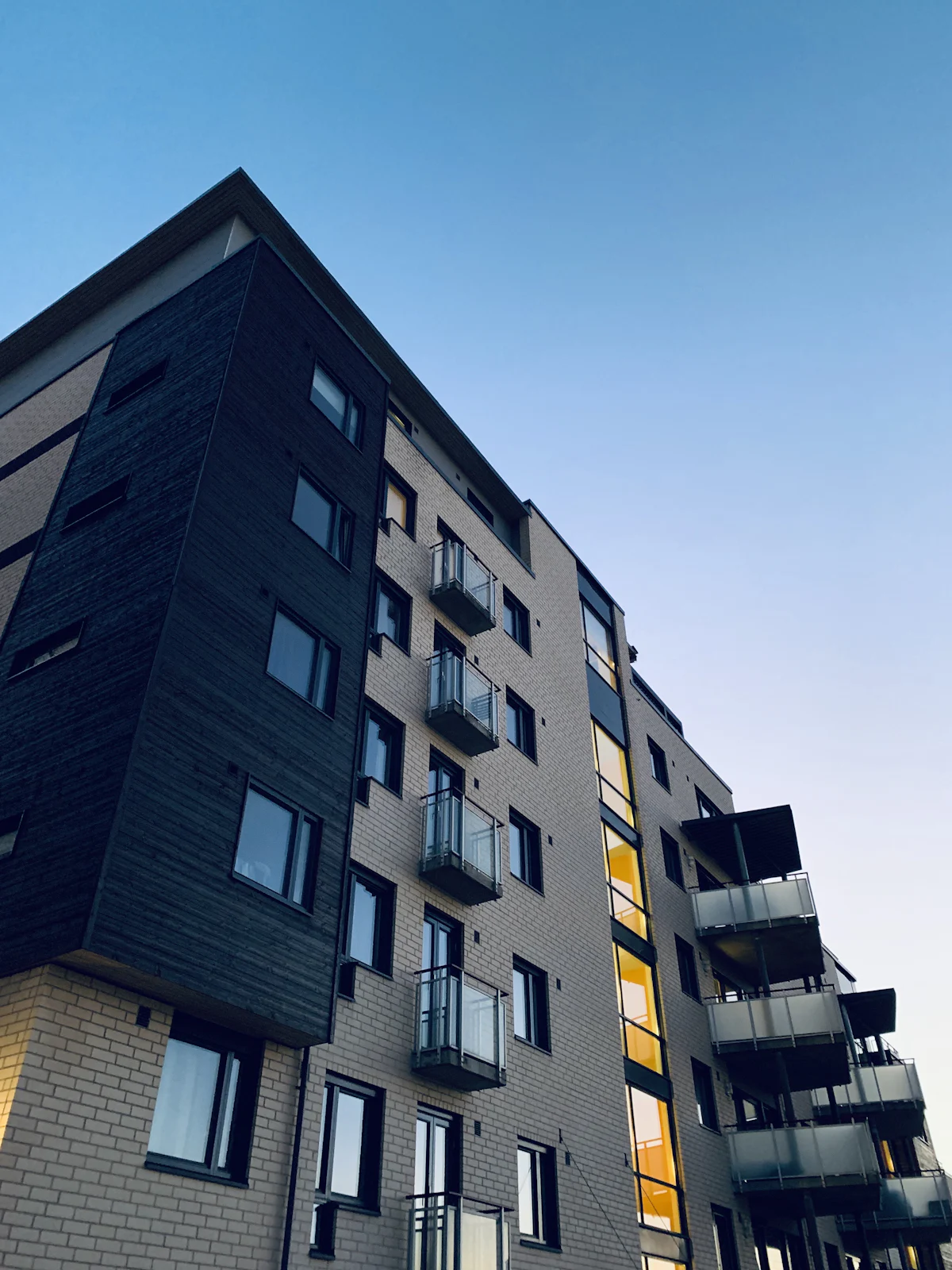
For most Texas real estate investors, the property is the balance sheet. The building generates the rent, secures the loan, and holds the equity. So the question of how much commercial property insurance you need is not really a question about premium — it is a question about how much of your capital you are willing to leave unprotected if a fire, a hailstorm, or a named storm takes the asset offline. The answer is rarely a single number. It is a structure: the right limit on the building, the right amount of rental income protection, the right liability program, and the right treatment of the perils that standard policies leave out.
This guide walks through the coverages that actually move the needle for investors holding property in Houston, Dallas, Austin, San Antonio, and the wider Texas market, and where the most expensive gaps tend to hide.
Insure the Building at Replacement Cost, Not Market Value or Loan Balance
The single most common valuation error we see is insuring a building for what it cost to buy, what it would sell for, or what the lender financed. None of those numbers tell you what it costs to rebuild. Property limits should be set to Replacement Cost Value (RCV) — the cost to reconstruct the structure at current Texas labor and materials prices — not market value, which includes land that never burns down, and not the loan balance, which is a financing figure.
Getting RCV right matters for two reasons. First, an underinsured building simply does not pay out enough to rebuild after a total loss. Second, most commercial property policies carry a coinsurance clause, typically at 80%, 90%, or 100%. If your insured limit falls below the required percentage of actual replacement cost at the time of loss, the carrier reduces even a partial claim by the same proportion you were underinsured. A roof claim you expected to be paid in full can come back cut by 25% purely because the building was under-scheduled. Refreshing values against current construction costs every renewal is the cleanest way to keep coinsurance from becoming a settlement-day surprise. Our commercial property coverage is built around validated replacement-cost values for exactly this reason.
Loss of Rents and Business Income: The Coverage Investors Forget
When a tenant-occupied building is damaged, the repair bill is only half the loss. The other half is the rent that stops arriving while the property sits uninhabitable. For an income-producing asset, loss of rents (the landlord version of business income coverage) is not optional — it is what keeps your debt service covered when the building cannot earn.
The amount of coverage should reflect your actual annual rent roll plus a realistic restoration timeline. In Texas, that timeline is often longer than investors assume: after a widespread hail or windstorm event, contractors and adjusters are stretched thin across the region, and a repair that should take three months can take nine. Set the limit and the period of restoration around a worst-case rebuild, not a best-case one, and confirm whether the policy pays on an actual loss sustained basis or caps at a fixed monthly figure.
Liability: Protecting Against the Claim You Did Not See Coming
Property coverage rebuilds the asset. General liability protects you when a third party — a tenant, a visitor, a delivery driver — is injured on the premises and looks to the owner to pay. A slip on an icy stairwell, a parking-lot injury, or an allegation that the property was negligently maintained can produce a claim that dwarfs any single repair bill.
Most investors carry a primary general liability limit of $1 million per occurrence and $2 million aggregate per location, then layer an umbrella on top to reach $5 million, $10 million, or more across the portfolio. The right total limit is driven by the size of the portfolio, the type of occupancy, and — importantly — what your lenders and any institutional partners contractually require. For owners holding rental and investment property, our real estate insurance programs coordinate the property and liability sides so the limits actually line up with the exposure.
Flood and Wind/Hail: The Texas Perils Standard Policies Exclude
This is where Texas investors get hurt most often, because the two perils most likely to damage a Texas building are frequently the two a standard policy does not cover.
- Flood is excluded from every standard commercial property policy. It has to be placed separately, through the NFIP or the private flood market. If your property sits in a FEMA flood zone, the lender will require it — but plenty of damaging floods occur outside mapped high-risk zones, as Houston has demonstrated repeatedly. Treating flood as optional because the building is "not in a flood zone" is one of the most expensive assumptions an investor can make.
- Wind and hail may be limited, sublimited, or carved out — especially along the Gulf Coast and in the Tier 1 windstorm counties. Coastal properties often need windstorm placed through a specialty market or TWIA, with its own deductible. Inland hail is usually covered, but increasingly on a percentage deductible (1%–5% of the building value) rather than a flat dollar amount, which can mean a much larger out-of-pocket figure than owners expect on a large building.
For any Texas real estate investor, confirming exactly how flood and wind/hail are handled — covered, sublimited, or excluded — before a storm is the difference between a manageable deductible and an uninsured loss.
A Worked Example: Setting the Numbers on a Single Building
Consider an investor who owns a $3 million-value, 24-unit apartment building in the Houston area generating $360,000 in annual rent. A defensible program might look like this:
- Building (RCV): $3,000,000, validated against current reconstruction costs, written at 100% coinsurance so a partial loss is not penalized.
- Loss of rents: $360,000 (12 months of rent roll) on an actual-loss-sustained basis to cover a long post-storm rebuild.
- General liability: $1M / $2M primary, with a $5M umbrella across the investor's holdings.
- Wind/hail: covered, with a 2% deductible — meaning roughly $60,000 out of pocket before the carrier pays on a building-wide hail claim.
- Flood: placed separately at the building's replacement value, even though the parcel is mapped outside the high-risk zone.
Change any one of those figures — insure the building at the $2.1 million loan balance instead of $3 million RCV, or skip flood because it "wasn't required" — and a single event can leave a six-figure hole the rent roll will spend years filling.
Structuring a Portfolio: Blanket Limits Across Multiple Properties
Investors holding three or more properties usually benefit from moving off a stack of separate policies and onto a blanket program. Instead of insuring each building under its own rigid limit, blanket coverage consolidates the total insured value across the schedule under a single limit that can flex to wherever the loss actually occurs.
The practical advantage is that if one building's value was slightly under-scheduled, the blanket limit can still respond — you are not capped at that location's individual figure. Blanket structures also tend to simplify administration, smooth pricing across the portfolio, and make adding or dropping a property at acquisition or sale far cleaner. For growing Texas investors, a single blanket program with a coordinated statement of values is almost always easier to manage than a drawer full of unaligned policies.
Lender Insurance Requirements: Get the Language Right Before Closing
Commercial real estate lenders impose specific insurance conditions, and a financing or refinance can stall when the policy does not match the loan documents. Expect requirements covering the insured limit (often tied to replacement cost or loan balance, whichever the lender specifies), required perils including wind and flood where applicable, the mortgagee clause naming the lender, lender's loss payable status, and minimum carrier financial-strength ratings.
The cleanest closings happen when this language is coordinated with the lender in advance, not discovered during underwriting. Pre-aligning mortgagee, additional-insured, and loss-payee provisions keeps the insurance from becoming the item that holds up the deal.
The Gaps Investors Discover Only After a Claim
Most coverage shortfalls do not announce themselves until the adjuster shows up. The recurring ones in Texas portfolios include:
- Coinsurance penalties from a building scheduled below current replacement cost, reducing an otherwise valid claim.
- Ordinance or law gaps — older buildings forced to rebuild to current code, with the upgrade and demolition costs uncovered unless the endorsement was added.
- Loss of rents set too low or on too short a restoration period to outlast a real post-storm rebuild.
- Missing or under-limited flood on properties outside mapped zones.
- Percentage wind/hail deductibles that produce a far larger out-of-pocket figure than the owner budgeted for.
- Vacancy clauses that quietly restrict coverage once a unit or building sits empty beyond a set number of days — a real risk during tenant turnover or renovation.
Each of these is fixable before a loss and effectively unfixable after one. That is the entire argument for structuring a program around how the property actually performs rather than buying a generic quote.
The Benchmark takeaway
How much commercial property insurance a Texas real estate investor needs comes down to four decisions made correctly: insure the building at validated replacement cost, protect the rent roll with realistic loss-of-rents limits, carry liability and umbrella limits sized to the portfolio and your lenders, and place flood and wind/hail deliberately rather than assuming they are handled. Pull your statement of values and a recent rent roll, confirm how each peril is treated, and check the numbers against the building's real reconstruction cost. If you want a second set of eyes on the structure before your next renewal or acquisition, contact a Benchmark advisor and we will review where the program is exposed before it goes to market.
Talk to a Texas commercial insurance advisor.
Get a structured program built around your real exposures — not a generic quote.
Quote Now → Schedule a Consultation